TL;DR
- Hardwood flooring works well in Northeast Florida — but the choice between solid and engineered hardwood is more consequential here than it is in most of the country, and getting it wrong creates real problems
- Engineered hardwood is the more reliable choice for most Northeast Florida homes: it handles humidity fluctuations better than solid hardwood and performs across more rooms and seasons
- Wood species and grade affect how well a floor holds up in Florida’s conditions — harder, more stable species outperform softer woods in a humid climate
- Acclimation is non-negotiable: hardwood that isn’t given time to adjust to your home’s humidity and temperature before installation will expand, cup, or gap after install
- Fall is an excellent installation window in Northeast Florida — lower humidity than summer, stable indoor conditions, and enough lead time to finish before the holidays
Hardwood floors are one of those upgrades that homeowners in Northeast Florida want and second-guess at the same time.
The concern is understandable. Florida is famous for humidity, heat, and moisture — conditions that are legitimately hard on wood. And there are plenty of horror stories about hardwood floors that cupped, buckled, or gapped because someone installed the wrong product, skipped acclimation, or didn’t account for what the Florida summer does to a subfloor.
But those stories are usually about mistakes that were avoidable. When hardwood is chosen correctly for the climate, acclimated properly before installation, and installed on a well-prepared subfloor with proper moisture management, it performs beautifully in Northeast Florida homes — and delivers the warmth, natural character, and refinishable longevity that no other flooring material quite replicates.
This guide covers what Jacksonville homeowners need to know before choosing hardwood: the product decisions that matter, the installation steps that protect the investment, and how to know when hardwood is the right call for a given room.
What Florida’s Climate Actually Does to Wood Floors
Wood is a hygroscopic material — it absorbs and releases moisture as the humidity around it changes. In most climates, seasonal humidity variation is moderate enough that well-installed hardwood handles it without visible movement. In Northeast Florida, the range is more extreme.
Summer humidity in Jacksonville regularly reaches 80–90% relative humidity outdoors, driving elevated indoor humidity even in air-conditioned homes. Winter is mild — temperatures rarely drop below 40°F — but indoor heating can drop relative humidity to 30–40%, creating the opposite condition. That seasonal swing from high to low and back again is what puts pressure on wood floors.
The pressure manifests as expansion and contraction. Wood expands across the grain as it absorbs moisture and contracts as it dries out. In a solid hardwood floor, this movement is significant and directional — the same dimension in every board, multiplying across the width of a room. In a floor that wasn’t properly acclimated before installation, that movement happens after the boards are locked in place, and it shows as cupping (edges rise higher than the center), crowning (center rises higher than the edges), or gapping between boards.
Understanding this dynamic is the starting point for every hardwood flooring decision in Florida.
Solid vs. Engineered Hardwood: The Decision That Matters Most in Florida
Solid Hardwood
Solid hardwood is a single piece of wood — typically ¾ inch thick — milled from one species. It’s the traditional hardwood floor: genuine, refinishable multiple times over decades, and available in a wider range of species and grades than engineered alternatives.
The limitation in Florida is dimensional stability. A solid plank moves with humidity as a single piece, and that movement is more significant than in an engineered product. In rooms with well-controlled, consistent humidity — a climate-controlled main living area in a home with good HVAC that runs consistently — solid hardwood performs well. In rooms with variable humidity, high moisture exposure, or subfloors over concrete slabs (common in Florida construction), solid hardwood faces more risk.
Solid hardwood is also sensitive to installation environment. It requires a wood subfloor (not concrete) and should not be installed in below-grade spaces like basements — though this limitation matters less in Florida where slab-on-grade construction is standard.
For the right room in the right home, solid hardwood is a premium choice. But in Northeast Florida, the conversation almost always starts with engineered.
Engineered Hardwood
Engineered hardwood has a real wood surface — the same species and grade you’d choose for solid — bonded to a cross-ply core of plywood or high-density fiberboard. The cross-grain construction of the core dramatically reduces the dimensional movement that causes cupping, gapping, and buckling in solid hardwood.
This stability is what makes engineered hardwood the more reliable choice in Northeast Florida. It handles humidity swings better, can be installed over concrete slabs (the default in most Florida construction), and performs across a wider range of rooms — including kitchens, where solid hardwood has more exposure risk.
Engineered hardwood is also refinishable, though typically fewer times than solid — the wear layer thickness determines how many refinish cycles the floor can support. Premium engineered products have wear layers thick enough for one or two refinishes over the life of the floor, which is meaningful long-term value.
For most Jacksonville homeowners weighing hardwood, engineered hardwood options are the stronger starting point — real wood surface, better stability, and a broader installation footprint than solid.
Wood Species That Hold Up in Florida’s Climate
Species selection matters more in Florida than in most markets. Janka hardness — the measure of a wood’s resistance to surface denting and wear — is one dimension, but dimensional stability (how much a species moves with humidity changes) is equally important here.
White oak is one of the best performers in Florida’s climate. Harder than red oak, more dimensionally stable than most domestic species, and versatile across styles from traditional to contemporary. Engineered white oak in a wider plank format is one of the most popular hardwood choices in Northeast Florida homes.
Red oak is the traditional domestic hardwood — widely available, refinishable, and a familiar aesthetic. It’s softer and moves more with humidity than white oak, which makes careful acclimation and subfloor moisture management more important.
Hickory is one of the hardest domestic species, with significant natural character variation. It holds up to heavy foot traffic and pet traffic particularly well, though its pronounced grain and color variation aren’t for every aesthetic.
Exotic species — Brazilian cherry, tigerwood, acacia, and others — are often marketed for hardness and durability. Some perform well in Florida; others have high moisture sensitivity or installation challenges. If a specific exotic species appeals to you, it’s worth discussing its Florida track record with your flooring consultant before committing.
Bamboo is sometimes listed alongside hardwood but is technically a grass. It can perform well in Florida, but quality varies significantly between manufacturers, and the installation and acclimation requirements are similar to hardwood.
Acclimation: The Step That Protects Everything Else
Acclimation is the process of allowing hardwood flooring to adjust to the temperature and humidity conditions of the room where it will be installed — before installation begins.
Hardwood arrives from the manufacturer at a specific moisture content. If that moisture content is significantly higher or lower than the equilibrium your home maintains, the flooring will change dimensions after it’s installed. Acclimation allows the boards to reach equilibrium with your home’s conditions before they’re locked in place.
According to industry standards for hardwood floor acclimation, the recommended acclimation period runs from a minimum of three days to over a week depending on species, product type, and the gap between the floor’s arriving moisture content and your home’s conditions. Engineered hardwood acclimation is shorter than solid hardwood in most cases — but it’s still required.
In Northeast Florida, acclimation is not optional. The humidity gap between a warehouse or shipping container environment and a Jacksonville home in September can be significant. A contractor who says acclimation isn’t necessary or tries to rush past it is a red flag. Lifetime Flooring’s team assesses your home’s conditions at the time of the in-home estimate and plans the acclimation period accordingly.
Why Fall Is an Excellent Hardwood Installation Window
Fall consistently ranks among the best seasons for hardwood installation — and in Florida specifically, the post-summer drop in humidity is a genuine advantage.
When Jacksonville’s peak summer humidity fades into October and November, indoor conditions stabilize. The gap between outdoor humidity and your home’s conditioned environment narrows, which means the acclimation period is more predictable and the floor goes down in conditions closer to its long-term environment. A floor installed in stable October conditions doesn’t face an immediate seasonal swing after it’s locked in place.
Fall installation also puts the project ahead of the holiday season — the highest-traffic period of the year for most homes. New hardwood that’s acclimated, installed, and given time to settle through October is ready for Thanksgiving entertaining rather than being a mid-project disruption.
Hardwood vs. LVP: The Honest Comparison for Florida Homeowners
The hardwood vs. luxury vinyl plank conversation comes up on nearly every hardwood consultation in Florida. Both are strong choices; they’re not interchangeable.
Where hardwood wins: Natural character, warmth underfoot, refinishability, and long-term resale value in upscale markets. A genuine hardwood floor — properly installed, well-maintained — has a quality that experienced buyers recognize and value. It can be refinished as it shows wear, extending its life across decades. No vinyl product replicates that.
Where LVP wins: Moisture tolerance, installation flexibility, price point, and low maintenance. LVP can go anywhere in the home — over concrete slabs, in kitchens, in rooms with variable humidity — without the acclimation, subfloor sensitivity, and ongoing care requirements of hardwood. For homeowners who want a durable, easy floor that looks great, LVP is a genuinely excellent choice.
Where they’re comparable: Both are widely available in realistic wood-look finishes, both hold up to normal household traffic, and both add to a home’s perceived value at resale.
The honest answer for most Jacksonville homeowners: engineered hardwood for formal spaces and main living areas where the natural character matters; LVP for kitchens, high-humidity rooms, and anywhere installation convenience outweighs the refinishability benefit.
Getting the Installation Right
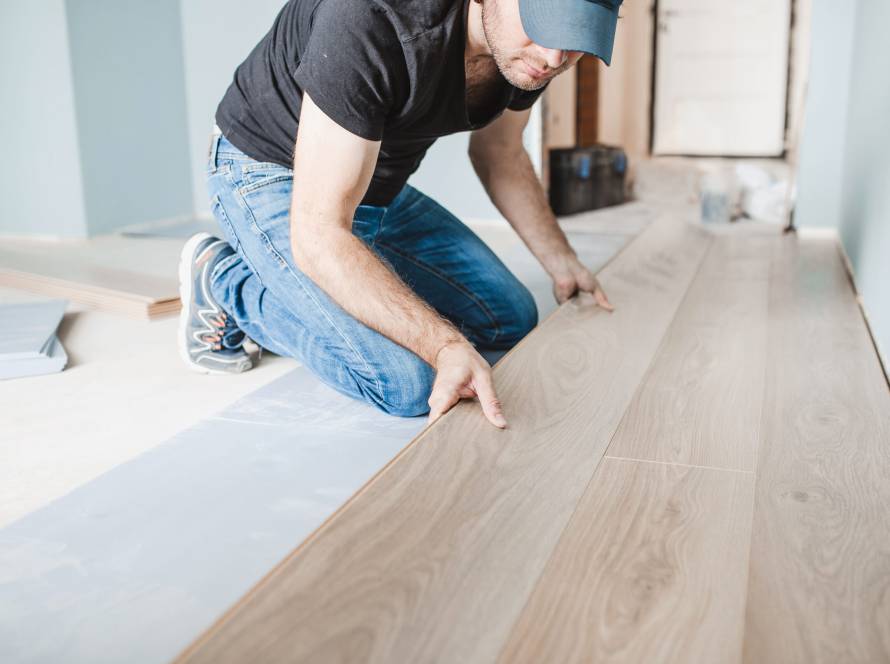
Hardwood installation is more demanding than most other flooring types, and the preparation steps are where most problems originate.
Subfloor assessment. Before any hardwood goes down, the subfloor needs to be evaluated for flatness, structural integrity, and moisture content. Lifetime Flooring’s professional installation process includes a subfloor assessment at the time of the in-home estimate — identifying any leveling, moisture barrier, or repair work needed before installation begins.
Moisture testing. Subfloor moisture content should be tested before installation and should fall within the manufacturer’s specified range for the product being installed. In Florida, moisture testing is not a formality — it’s a necessary step that identifies potential issues before they become expensive ones.
Expansion gaps. Hardwood requires a gap around the perimeter of the room and at all vertical obstructions — baseboards, door casings, posts — to allow for dimensional movement. Installers who skip or minimize these gaps create a floor that has nowhere to move, which forces cupping and buckling when the seasons change.
The National Association of Realtors consistently identifies hardwood flooring as among the most impactful upgrades for resale value in upscale residential markets — and in Northeast Florida’s competitive real estate market, properly installed hardwood in main living areas makes a meaningful impression at listing.
Frequently Asked Questions
Is hardwood flooring a good choice for Northeast Florida homes? Yes — when the right product is chosen and the installation is done correctly. Engineered hardwood is the more reliable choice for most Florida homes: its cross-ply core construction handles humidity fluctuations better than solid hardwood, and it can be installed over concrete slabs, which are standard in most Florida construction. With proper subfloor preparation, acclimation, and moisture management, engineered hardwood performs well and lasts for decades in Northeast Florida.
What is the difference between solid and engineered hardwood? Solid hardwood is a single piece of wood milled to a consistent thickness — typically ¾ inch. Engineered hardwood has a real wood surface layer bonded to a cross-ply core, which reduces the dimensional movement caused by humidity changes. In Florida’s climate, engineered hardwood is more dimensionally stable, more versatile in terms of installation surfaces, and the more reliable choice for most rooms. Both are genuine hardwood — the surface of engineered hardwood is the same real wood species you’d find in a solid plank.
What wood species work best in Florida’s humid climate? White oak is among the best performers in Northeast Florida’s climate — harder than red oak and more dimensionally stable under humidity variation. Red oak is widely used but moves more with humidity changes, making proper acclimation more critical. Hickory is the hardest common domestic species and holds up particularly well in high-traffic areas. When evaluating exotic species, ask specifically about their humidity sensitivity and Florida installation track record before committing.
What is acclimation and why does it matter in Florida? Acclimation is the process of allowing hardwood flooring to adjust to your home’s temperature and humidity before installation — typically three days to over a week depending on the product and conditions. It matters more in Florida because the gap between a product’s shipping environment and a Jacksonville home’s conditions is often larger than in milder climates. Skipping or rushing acclimation means the floor reaches equilibrium after it’s installed, causing cupping, gapping, or buckling that requires repair.
Can hardwood be installed over a concrete slab? Engineered hardwood generally yes; solid hardwood generally no. Concrete slabs are standard in most Florida construction, and solid hardwood’s moisture sensitivity makes it a poor fit for direct-to-slab installation. Engineered hardwood — with appropriate moisture testing, vapor barriers, and either a floating or glue-down installation method — can go over properly prepared concrete. The in-home estimate includes a concrete slab assessment when applicable.
How long does hardwood flooring last in a Florida home? Engineered hardwood installed correctly in a Florida home typically lasts 25–50 years, depending on the wear layer thickness, the quality of the product, and how the floor is maintained. It can typically be refinished once or twice over its life depending on wear layer depth. Solid hardwood can last longer in the right rooms — formal spaces with stable humidity and limited direct moisture exposure — and can be refinished more times. Day-to-day maintenance in Florida is consistent with any climate: sweep or vacuum regularly, damp-mop (not wet-mop) when needed, and address moisture spills promptly.
Is fall a good time to install hardwood flooring in Northeast Florida? Yes. Fall is one of the best installation windows in Florida specifically because the drop in summer humidity creates more stable and predictable indoor conditions for acclimation and installation. A floor installed in October — when humidity has moderated from summer peaks — adjusts to conditions closer to its long-term environment. Fall installation also puts the project ahead of the holiday season, avoiding the disruption of a mid-project home during the year’s highest-traffic stretch.
Schedule Your Free In-Home Estimate
Hardwood flooring is one of the investments in a home that buyers remember — and homeowners live with every day. Getting the product choice, acclimation, and installation right is what separates a floor that lasts decades from one that causes problems within the first year.
Lifetime Flooring brings a combined experience of 40+ years to every Northeast Florida hardwood project. Every project starts with a free in-home estimate that includes a genuine subfloor and moisture assessment — identifying upfront what preparation work is needed so nothing gets discovered mid-install.
Schedule your free in-home estimate today and find out which hardwood products are right for your home, your rooms, and Northeast Florida’s climate.