TL;DR — Quick Answers
- Old, damaged, or outdated floors drag down the entire look and feel of your home — even if everything else is updated.
- Scratches, stains, warping, uneven surfaces, and persistent odors are signs your floors have hit the end of their useful life.
- Florida’s humidity accelerates floor deterioration — what might last 20 years in a dry climate can fail in 10 here.
- Replacing worn floors is one of the fastest ways to modernize a home and lift its market value.
- The process is more manageable than most homeowners expect — old floor removal, subfloor prep, and new installation are all handled by a quality contractor.
- Schedule a free in-home estimate to find out exactly what’s underneath your current floors and what your best options are.
You know that feeling when you walk into your own home and something just feels tired? Sometimes it’s hard to pinpoint exactly what it is. The paint is fine. The furniture is fine. But the room still feels dated, worn down, and a little depressing. Nine times out of ten, the answer is on the floor.
Floors are the single largest surface in any room. When they’re in bad shape — scratched, stained, faded, warped, or simply stuck in a decade that passed a long time ago — they set the tone for everything else. You can have beautiful furniture and fresh paint and still feel like your home needs something. That something is usually the floor underneath it all.
This guide is for Jacksonville homeowners who are living with floors they’re not proud of and aren’t sure where to start. We’ll cover how to tell when your floors have genuinely reached the end of their useful life, what Florida’s climate does to floors that aren’t holding up, what your replacement options actually look like, and how to get from worn-out to revitalized without the process being overwhelming.
The Clear Signs Your Floors Are Past Their Prime
Some floor problems are cosmetic. Others are structural. Knowing which category you’re dealing with determines whether a repair might buy you some time or whether replacement is the only honest answer.
Deep Scratches and Gouges That Can’t Be Sanded Out
Hardwood floors can be refinished — but only a certain number of times, and only if the wear layer still has enough thickness to sand down to fresh wood. Once the scratches and gouges have cut through the wear layer into the structural wood, or once the floor has already been refinished several times, refinishing isn’t a real option anymore. The same goes for LVP and laminate — once the wear layer is gone, the floor is gone. There’s no meaningful repair for a wear layer that’s been scratched through.
Warping, Buckling, and Uneven Surfaces
A floor that rises in the middle, dips in corners, or has boards that have separated and lifted is telling you something important: there’s a moisture problem underneath it. In Jacksonville homes, this almost always means a failed vapor barrier, a moisture intrusion issue at the slab level, or a drainage problem that’s been allowing water to work into the subfloor over time. The visible floor damage is the symptom — the moisture is the cause. Fixing only the surface without addressing the moisture problem means the new floor will fail the same way.
Stains That Have Become Part of the Floor
Some stains come out. Pet urine that has soaked through carpet into the padding and down to the subfloor is not one of them. Neither are old water stains in hardwood that have darkened and spread over years, or tile grout that has permanently discolored from years of traffic and moisture. When stains have penetrated beyond the surface layer of the material, cleaning solutions won’t solve the problem. The floor needs to come out.
Persistent Odor That Doesn’t Respond to Cleaning
Odor that comes back after cleaning — especially pet odor, musty smell, or a mildewy undertone — is almost never in the floor surface itself. It’s in the padding underneath carpet, in the subfloor, or in both. In Florida’s humidity, carpet padding absorbs and holds moisture in ways that create long-term odor problems that no amount of cleaning or deodorizing will permanently fix. If you’ve cleaned and treated repeatedly and the smell keeps coming back, the carpet and padding need to go.
Fading, Discoloration, and Visual Aging
Florida’s intense UV exposure fades floors faster than most homeowners expect. LVP and laminate near large windows or sliding glass doors can develop noticeable color variation within a few years if they weren’t spec’d with UV resistance in mind. Hardwood that hasn’t been refinished in 15+ years often looks dull, gray, and flat rather than warm and vibrant. Tile that made sense in 1998 often makes a home feel like it was frozen in time. Visual aging is a legitimate reason to replace floors — your home should feel like it belongs to right now.
Creaking, Soft Spots, and Structural Concerns
A floor that creaks in the same spot every time, or one that has a soft, spongy feel underfoot, is signaling subfloor deterioration. In Florida homes — particularly those with wood subfloors rather than concrete slabs — long-term moisture exposure can cause the subfloor itself to soften, delaminate, or develop rot. This is a situation where getting a professional assessment quickly matters. A deteriorating subfloor doesn’t fix itself, and the longer it goes unaddressed, the more expensive the repair becomes.
Why Jacksonville’s Climate Makes Floor Deterioration Worse
This is the piece of the puzzle that Jacksonville homeowners often don’t fully account for when they’re evaluating their floors. The combination of year-round high humidity, intense UV, salt air in coastal areas, and the specific way Florida homes are built creates conditions that accelerate floor wear significantly compared to drier climates.
According to the EPA’s brief guide to mold and moisture in the home, indoor relative humidity above 60% creates conditions favorable for mold and mildew growth in building materials — including flooring and subfloor components. Jacksonville regularly exceeds this threshold, particularly in homes with older HVAC systems, poor ventilation, or any kind of moisture intrusion at the foundation level.
What this means practically is that floors in Jacksonville homes often reach end-of-life sooner than the manufacturer’s rated lifespan. A carpet rated for 15 years in normal residential use may show moisture damage, odor, and wear at 8 to 10 years in a Florida home that doesn’t have optimal humidity control. Laminate and lower-grade LVP that handles dry climates well can swell at seams and delaminate in high-humidity environments. This isn’t a product defect — it’s a climate reality that requires material choices and installation methods calibrated specifically for Florida conditions.
Repair or Replace? How to Think Through the Decision
Not every floor problem requires full replacement. Here’s an honest framework for thinking through whether a repair is a legitimate option or a temporary fix that delays an inevitable cost.
When Repair Actually Makes Sense
Hardwood with surface scratches and dullness, no structural damage, and sufficient wear layer thickness — refinishing is a cost-effective solution that can restore the floor to near-new condition.
Isolated tile cracking from a single impact, with the surrounding tile and subfloor in good condition — replacing individual tiles is a reasonable repair if matching tile is available.
Minor carpet staining in one area of an otherwise sound, relatively new carpet — professional cleaning or a patch repair may extend the useful life.
Small sections of LVP or laminate with click-joint separation in a low-moisture area — replacing individual planks is possible if matching product is still available.
When Replacement Is the Honest Answer
Moisture damage anywhere in the floor system — once moisture has reached the subfloor or caused structural movement in the material, repair addresses only the symptom.
Widespread staining, odor, or pet damage throughout carpet and padding — the source of the problem is embedded in the material itself.
Hardwood that has already been refinished multiple times — there’s no wear layer left to sand down to clean wood.
Flooring that is visually so outdated that it undermines the value and presentation of the entire home — replacement is an investment, not a cost.
Any floor where the subfloor assessment reveals leveling issues, rot, or moisture damage that needs to be addressed — this requires full removal regardless of the floor’s surface condition.
The most important thing to understand about this decision is that a professional floor assessment costs nothing and gives you actual information rather than guesswork. An experienced installer can look at your floors, get under them if needed, test for moisture, and give you an honest answer about what repair versus replacement actually looks like for your specific situation.
The Hidden Cost of Waiting on Worn-Out Floors
There’s a common instinct to put off floor replacement — it feels like a big project, a significant expense, and something that can wait until next year. In most cases, waiting makes the problem more expensive, not less.
Subfloor Damage Compounds Over Time
A floor with active moisture intrusion that goes unaddressed for another year doesn’t stay the same — it gets worse. Subfloor damage that might have required leveling and a vapor barrier at year one may require partial subfloor replacement by year three. The underlying problem doesn’t pause while you decide.
Indoor Air Quality Deteriorates
Old carpet, particularly in Florida’s humid environment, doesn’t just smell bad — it actively degrades indoor air quality. The American Lung Association notes that carpets can trap pollutants like dust mites, pet dander, mold spores, and other allergens at levels far higher than hard surface flooring. In a humid climate where these biological contaminants thrive, aging carpet with moisture damage in the padding becomes a significant indoor air quality issue — particularly for children, elderly family members, and anyone with respiratory sensitivities.
Your Home Loses Value Every Year You Wait
Flooring is one of the first things buyers, appraisers, and guests notice. The National Association of Realtors Remodeling Impact Report consistently shows that new flooring is one of the top improvements for increasing a home’s appeal and perceived value. Conversely, visibly worn, stained, or outdated floors actively reduce what buyers are willing to offer — and in competitive markets like Jacksonville, that gap in perceived value is significant. Every year with bad floors is a year your home’s value is being quietly undercut.
The Psychological Cost Is Real Too
This one doesn’t show up on a spreadsheet, but it matters. Living with floors you’re embarrassed about — floors you apologize for when guests come over, floors that make you hesitant to host — affects how you feel about your home every day. Your home should be a place that makes you feel good, not one you’re perpetually planning to fix someday. Someday is a project that can usually be done within a week.
What Floor Replacement Actually Looks Like: The Full Process
One of the biggest reasons homeowners put off floor replacement is that the process feels mysterious and overwhelming. It doesn’t have to be. Here’s exactly what a quality floor replacement project looks like from start to finish in a Jacksonville home.
Step 1: Free In-Home Assessment
A professional comes to your home, walks every room with you, and evaluates the current floors — surface condition, subfloor condition, moisture levels, and what preparation work will actually be needed. This is where you get honest information rather than assumptions. It costs nothing and takes less than an hour.
Step 2: Material Selection
Based on your rooms, your lifestyle, your budget, and your aesthetic goals, the installer recommends the right material for each space. This is also when you visit the showroom if you want to see and touch samples in person before committing — which most homeowners find genuinely helpful when comparing LVP colors, hardwood species, or tile formats.
Step 3: Old Floor Removal
Your existing flooring — carpet, vinyl, tile, laminate, whatever it is — gets fully removed. This is not an optional shortcut. Installing new flooring over old flooring without addressing what’s underneath is one of the most common reasons floor projects fail prematurely. Proper removal lets the installer actually see and evaluate the subfloor.
Step 4: Subfloor Preparation
This is the most critical step in the entire process — and the one that separates a quality installation from a cheap one. The subfloor gets assessed for levelness, moisture, and structural integrity. Leveling compound is applied where needed. Moisture barriers or vapor barriers are installed where the conditions require them. Any soft spots or damaged sections are repaired. Everything that happens after this step depends on getting this one right.
Step 5: Installation
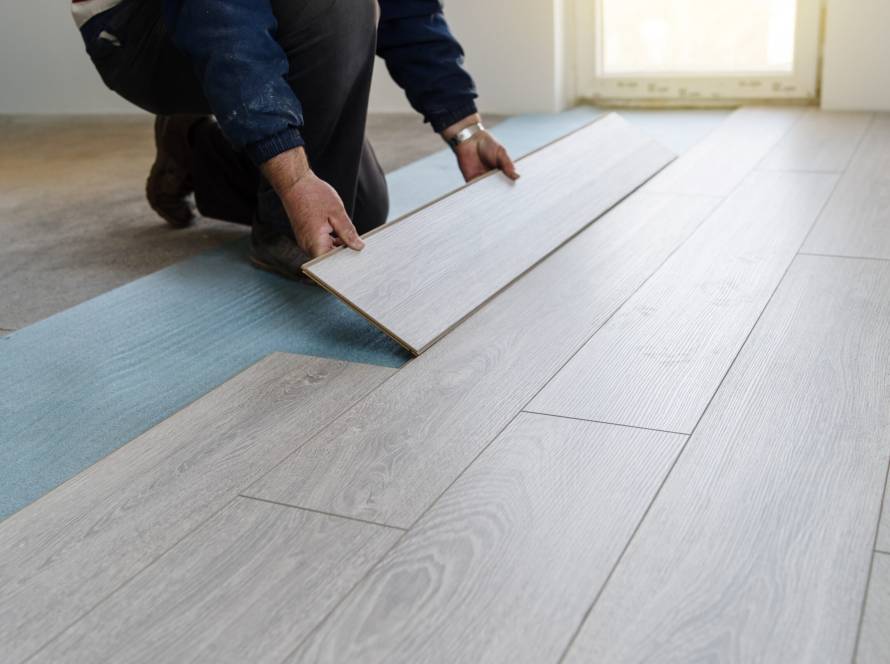
The new flooring goes down on a properly prepared subfloor. For most residential projects, this takes 1 to 3 days depending on square footage and material. Clean transitions between flooring types, accurate cuts at doorframes and cabinets, and proper finishing at walls and thresholds are what separate a polished result from a rough one.
Step 6: Cleanup and Walkthrough
A good installer leaves your home clean and walks you through the completed project before considering the job done. You should be able to inspect every transition, every edge, and every visible seam — and the installer should stand behind what you’re looking at.
Best Replacement Options for Worn Jacksonville Floors
If you’re replacing damaged, outdated, or worn floors in a Jacksonville home, the material choice matters — especially given Florida’s climate. Here’s what works best for the most common replacement scenarios.
Replacing Old Carpet: LVP or Engineered Hardwood
Most homeowners replacing old carpet choose luxury vinyl plank or engineered hardwood — and for good reason. LVP is waterproof, scratch-resistant, and comes in realistic wood and stone visuals that modern carpet simply can’t compete with aesthetically. It’s also significantly easier to keep clean, which is often the main thing that pushed homeowners toward replacing the carpet in the first place. Engineered hardwood is the premium choice for homeowners who want the warmth and character of real wood and are willing to invest more for it.
Replacing Old Tile: Large Format Porcelain
Old 12×12 tile — whether it’s beige, almond, or any of the other colors that were everywhere in Jacksonville homes in the 1990s and 2000s — dates a home dramatically. Replacing it with large format porcelain in stone-look, wood-look, or contemporary neutral tones transforms a kitchen or bathroom visually in a way that feels like a complete renovation. Fewer grout lines mean easier cleaning and a much more modern aesthetic.
Replacing Worn Laminate or Old Vinyl: LVP
Laminate and old sheet vinyl that has lifted, bubbled, faded, or worn through the surface pattern are almost always best replaced with LVP. Modern LVP is in an entirely different category from the laminate and vinyl it typically replaces — thicker, more dimensional, more realistic in appearance, more durable at the wear layer, and engineered with waterproof options that hold up in Florida humidity.
Replacing Worn Hardwood: Refinish First, Then Decide
If hardwood floors are worn but structurally sound — no moisture damage, no significant warping, adequate wear layer remaining — refinishing is worth serious consideration before replacement. A professional refinish can restore hardwood floors that look terrible to genuinely beautiful condition at a fraction of the cost of full replacement. Have an experienced flooring professional assess the wear layer thickness and overall condition honestly before deciding either way.
Why Jacksonville Homeowners Turn to Lifetime Flooring for Floor Revitalization
When you’re dealing with floors that have reached the end of their useful life — whether from age, moisture damage, pet wear, or just being stuck in a decade that passed twenty years ago — the contractor you choose determines everything about the outcome. Lifetime Flooring is part of the Lifetime Family of brands, with combined experience of 40+ years serving Northeast Florida homeowners. That depth of home improvement experience in this climate, with these subfloors, is the foundation behind every flooring project the team takes on.
Every project starts with a free, no-obligation in-home assessment. The team doesn’t just measure square footage — they look at what’s actually going on with your floors, test for moisture where it’s relevant, and give you an honest picture of what’s underneath before any material conversation happens. If there’s a subfloor issue, you’ll know about it before the estimate, not after installation begins.
Old floor removal, subfloor leveling, moisture barriers, and proper preparation are part of the standard process — not optional upgrades. The showroom on Philips Highway carries the full range of replacement materials: LVP, engineered hardwood, hardwood, tile and stone, and carpet, so you can compare options in person with real samples rather than making decisions from a website thumbnail.
Frequently Asked Questions About Replacing Worn or Outdated Floors
Q: How do I know if my floors need to be replaced or just repaired? A: Surface scratches, dullness, or small isolated stains can often be addressed with refinishing or targeted repair. Moisture damage, widespread warping, persistent odor that doesn’t respond to cleaning, structural soft spots, or flooring that has already been refinished multiple times are signals that replacement is the right answer. A professional assessment gives you a definitive answer based on what’s actually going on — not guesswork.
Q: Can you install new flooring over old flooring? A: Technically, yes — practically, it’s rarely a good idea. Installing over existing flooring skips the subfloor inspection and preparation that makes new floors last. Whatever moisture damage, leveling problems, or structural issues exist underneath stay underneath, and they’ll affect the new floor over time. A quality installer will remove the existing material as a standard part of the process.
Q: What is the best flooring to replace old carpet in a Florida home? A: Luxury vinyl plank is the most popular replacement for old carpet in Jacksonville homes, and for good reason. It’s waterproof, dramatically easier to clean, and looks far better than carpet in most modern home styles. Engineered hardwood is the premium alternative for homeowners who want the warmth and authenticity of real wood. The right choice depends on your budget, your lifestyle, and the specific rooms being upgraded.
Q: How much does it cost to replace floors in a Jacksonville home? A: Pricing varies based on material, square footage, subfloor condition, and scope of work. LVP installation is generally the most budget-accessible option. Engineered hardwood and tile run higher. Most complete room installations — including old floor removal and subfloor preparation — fall within a range that a detailed in-home estimate will clarify precisely. There’s no useful general number without knowing your specific home’s conditions.
Q: How long does it take to replace floors in a Jacksonville home? A: Most single-room replacements are completed in one day. Multi-room or whole-home projects typically take 2 to 5 days depending on total square footage, material type, and subfloor preparation needs. Your installer should give you a realistic timeline before work begins.
Q: Do you handle old floor removal, or do I need to do that myself? A: Full old floor removal is part of the standard installation process. Whether it’s carpet, vinyl, laminate, tile, or hardwood, the team handles removal, disposal, and whatever subfloor preparation is needed before new material goes down. You don’t need to do anything before installation begins except move personal items from the area.
Your Home Deserves Better Than Floors You’re Embarrassed By
Worn-out, damaged, and outdated floors don’t just affect how your home looks — they affect how you feel about being in it every day. The good news is that floor replacement is faster, more straightforward, and more transformative than most homeowners expect. A week from now, your home could look and feel completely different.
The first step is finding out exactly what you’re working with — what’s underneath your current floors, what preparation work is needed, and what your best replacement options actually are for your home and budget.
Call Lifetime Flooring today at (904) 302-5745 to schedule your free in-home estimate. The team will walk your space, assess your current floors honestly, and give you a clear picture of what it would take to revitalize your home — no pressure, no obligation.
Stop by the showroom at 8440 Philips Hwy, Jacksonville to see the full selection of replacement flooring in person before you decide. Visit lifetimeflooringjax.com to explore flooring options and get started with Lifetime Flooring.